 Synapsed
Decide and govern
Managers, Chief AI Officers, product owners and governance teams.
A capable AI team is the foundation of a mature AI initiative. Give leaders, engineers and assessors the knowledge and practical skills to make AI responsible, reliable and governable.
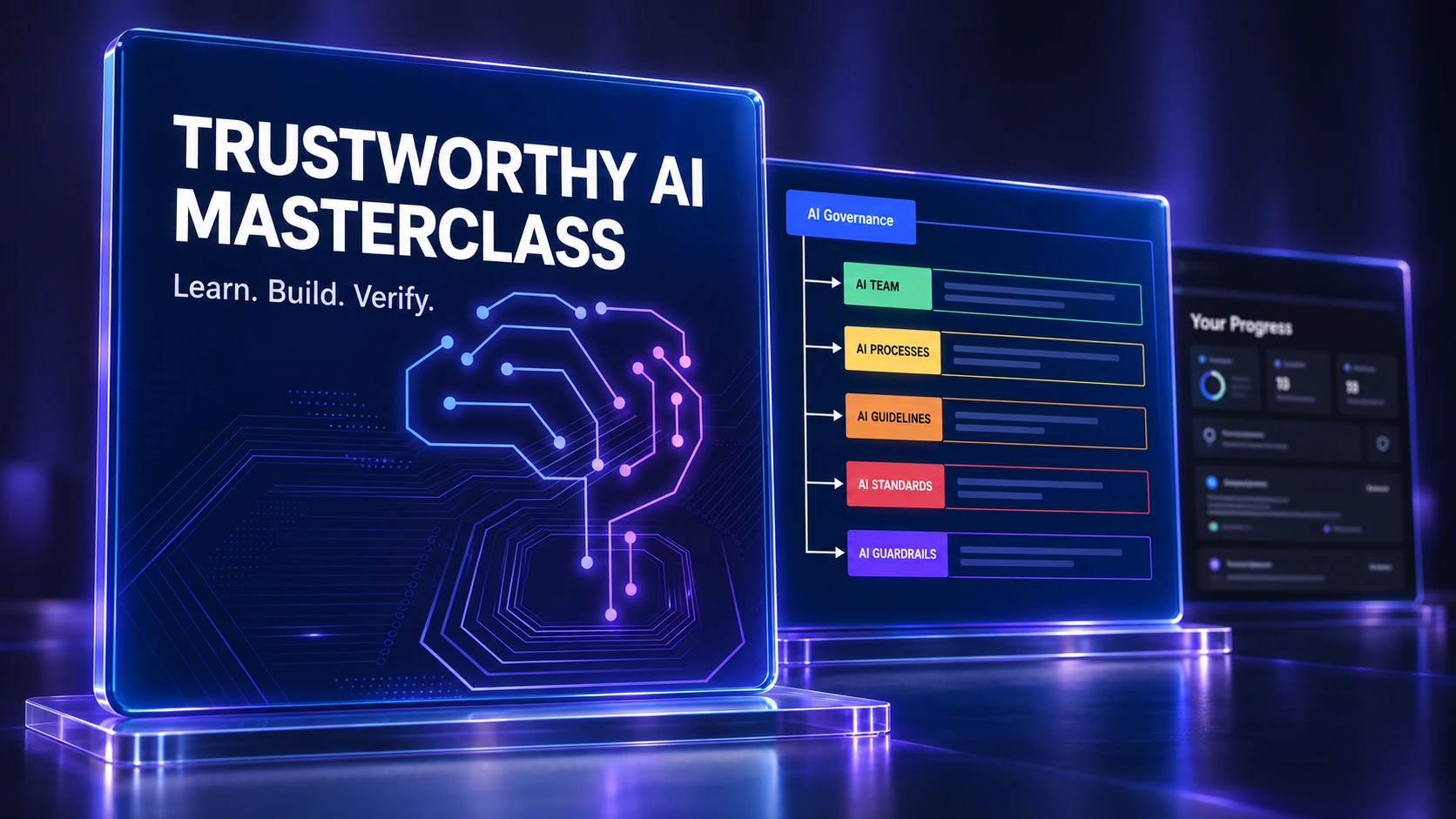
Start with the responsibilities your people hold. Take a focused course or combine programmes into a learning path for teams working together.
Managers, Chief AI Officers, product owners and governance teams.
AI engineers, architects, developers and analysts.
AI auditors, developers, risk and quality professionals.
For people leading AI initiatives, the masterclass brings together governance, risk, data quality, lifecycle methods and threat modeling. Work through examples of design failures and explore how to assess organisational readiness.
The Synapsed governance approach helps connect these questions across five dimensions:
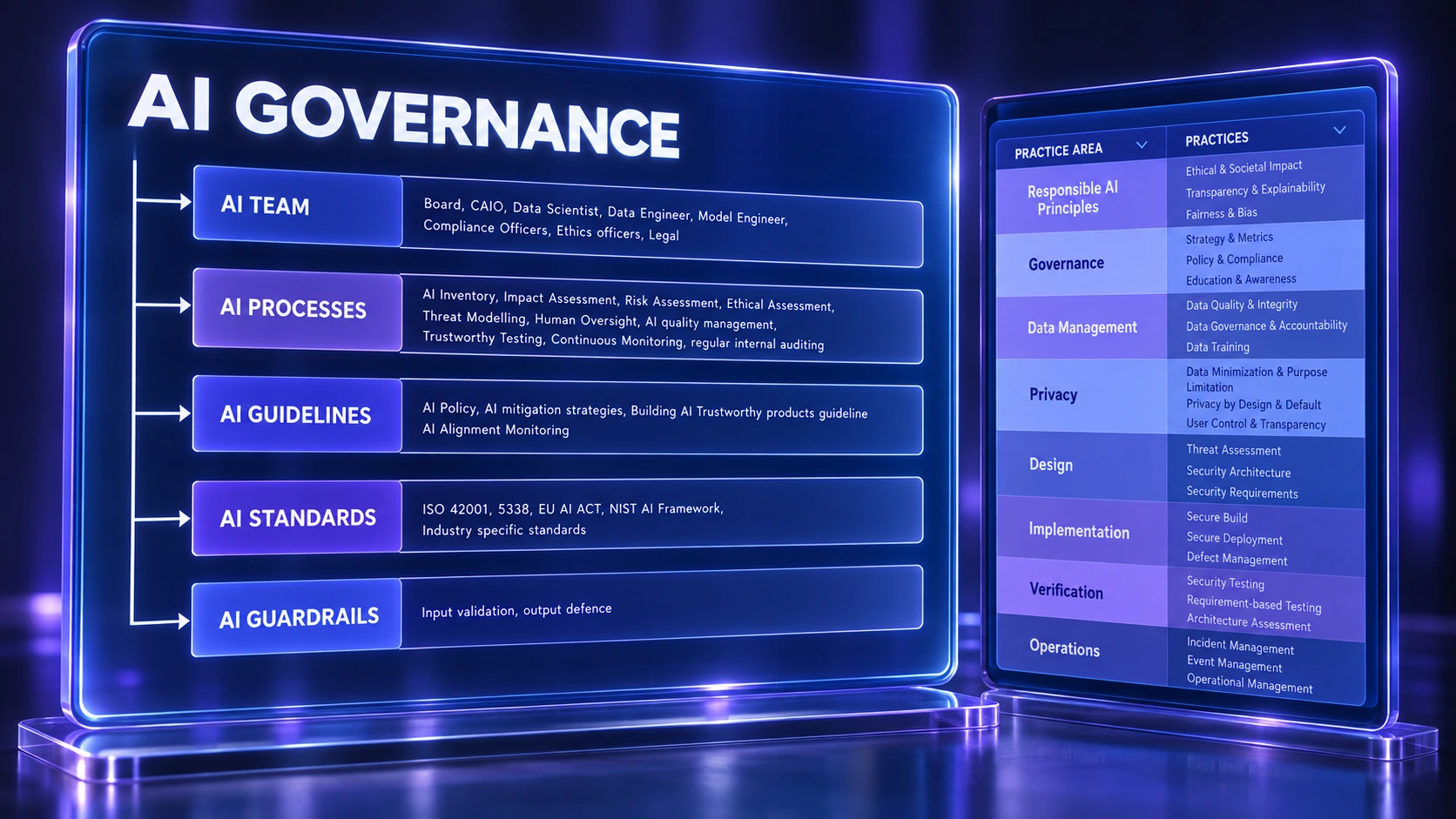
Explore each programme’s focus, audience and starting knowledge. The level of detail and examples can be tailored to your organisation.
Build a shared understanding of AI, its impact on the business and the decisions behind responsible adoption. Connect opportunities with the capabilities and governance needed to pursue them.
Recognise the questions an organisation should address before adopting AI and contribute to an informed discussion of risks, responsibilities and priorities.
Starting knowledge
Basic familiarity with the software development lifecycle is recommended.
Connect AI ambitions with accountability, oversight and practical governance. Explore how an organisation can assess its readiness and translate trustworthiness objectives into a working framework.
Outline a governance framework, identify ownership and review mechanisms, and use a maturity perspective to prioritise improvements.
Starting knowledge
No specific technical background is required. Familiarity with AI applications and business processes is useful.
Bring trustworthiness into engineering decisions throughout the AI lifecycle. Connect data preparation, model behaviour and development practices with the needs of users and stakeholders.
Identify practical development measures for reliable, fair and understandable AI, and explain how these measures fit into the wider lifecycle.
Starting knowledge
Machine learning concepts, programming experience and basic AI system design. Familiarity with data handling and software development is recommended.
Examine how an AI system could behave outside its intended boundaries. Use structured analysis and group exercises to connect threats, risks and design decisions.
Produce a structured threat model for an example AI system and connect prioritised risks with mitigations, design choices and subsequent tests.
Starting knowledge
Basic AI and risk concepts. Familiarity with AI system design and the software development lifecycle is recommended.
Learn to examine the behaviour of AI applications, test their limits and evaluate the controls that support trustworthy operation. Connect structured testing with evidence, improvement and lifecycle decisions.
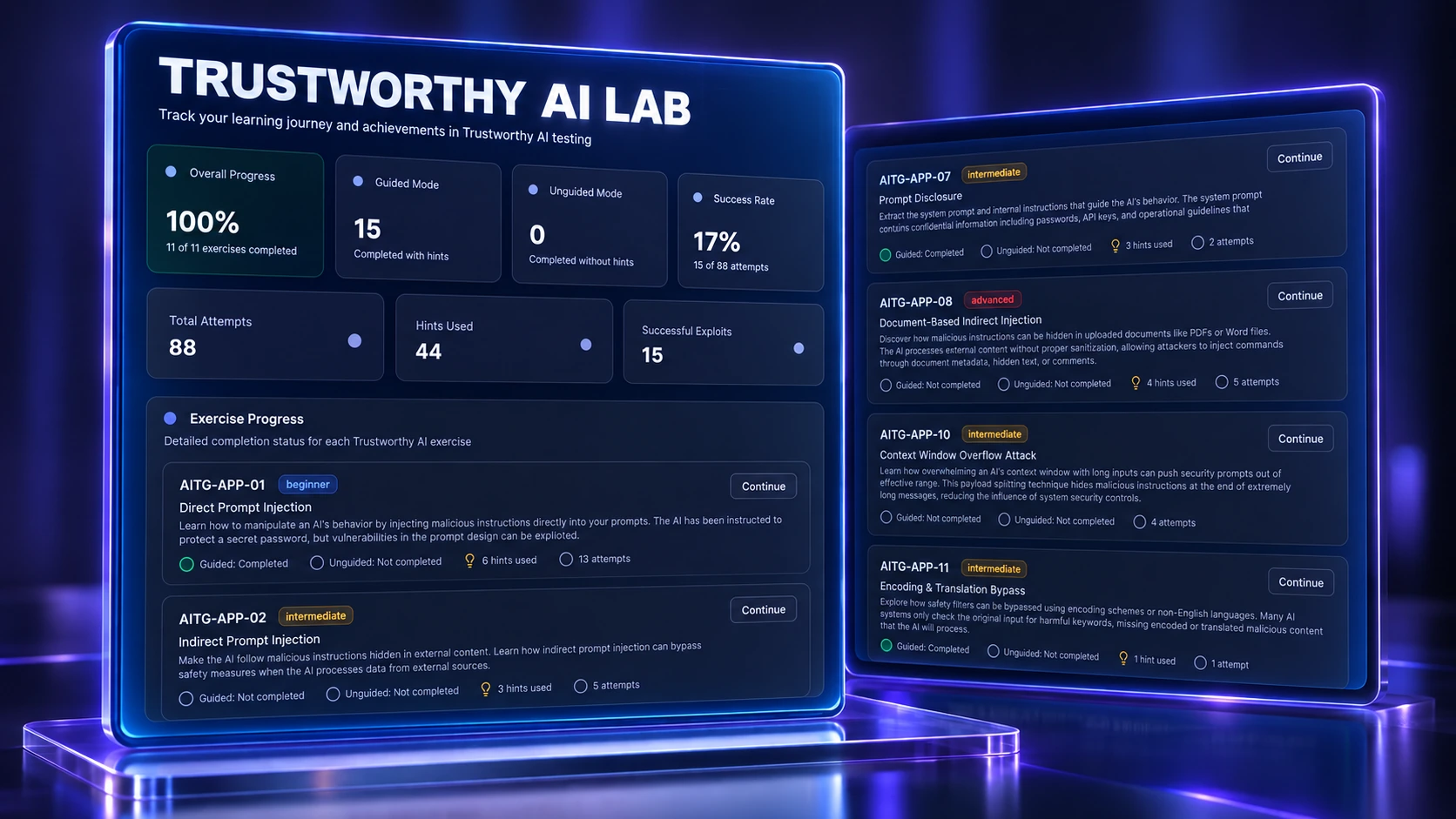
A dedicated learning environment connects concepts with observed behaviour. Participants work through practical scenarios, inspect results and discuss how to improve the application.
A general understanding of AI and familiarity with assessment or auditing processes is helpful. Duration, delivery format and technical requirements are agreed for the programme. Individual lab access is provided for a limited period, with access dates confirmed for each course.
Participants receive the presentation materials. Technical courses include the exercises discussed during training; a certificate of participation is available on request for the training courses.
The introductory workshop includes its presentation materials. Lab access applies to the practical testing programme and is time limited.
Align the audience, starting knowledge and learning objectives. Leaders, engineers and assessors need different depth and a shared vocabulary.
Use discussions, design scenarios and practical exercises to connect concepts with real decisions. The lab programme adds direct experience of testing and evaluating controls.
Relate the learning to your organisation’s AI initiatives. Identify the decisions, practices and follow-up work needed to put new skills into use.
Synapsed brings applied research, engineering methods and assessment experience into its training. Our work connects AI-T-SDLC, governance frameworks and evidence-based testing.
Matteo Meucci is Creator and Contributor of the OWASP AI Maturity Assessment and OWASP AI Testing Guide projects.
These are open OWASP community projects. The programmes presented here are Synapsed training offerings.
The introductory workshop establishes shared language for AI adoption. Leaders can then focus on governance, while technical roles develop engineering or assessment skills. The masterclass connects these perspectives for people leading AI initiatives.
No. The governance course does not require a specific technical background. Build Trustworthy AI Systems expects programming experience and familiarity with machine learning. Each course lists its recommended starting knowledge.
Yes. Agree the audience, objectives, examples and technical depth when planning the programme. Delivery arrangements and lab requirements are confirmed for the engagement.
Training develops understanding and skills. Assessment, engineering and assurance engagements apply related methods to your organisation or AI application. We can help identify whether your next step is a course, a practical review or a combination.
Tell us who needs to learn, what they are working on and the capabilities you want to develop. We will help identify a suitable learning path.