 Synapsed
Understand your readiness.
Prioritise the work ahead.
The Synapsed 5D AI Governance Assessment examines the organisational capabilities needed to govern AI. It brings stakeholders and evidence into one review, so improvement priorities reflect how the organisation actually works.
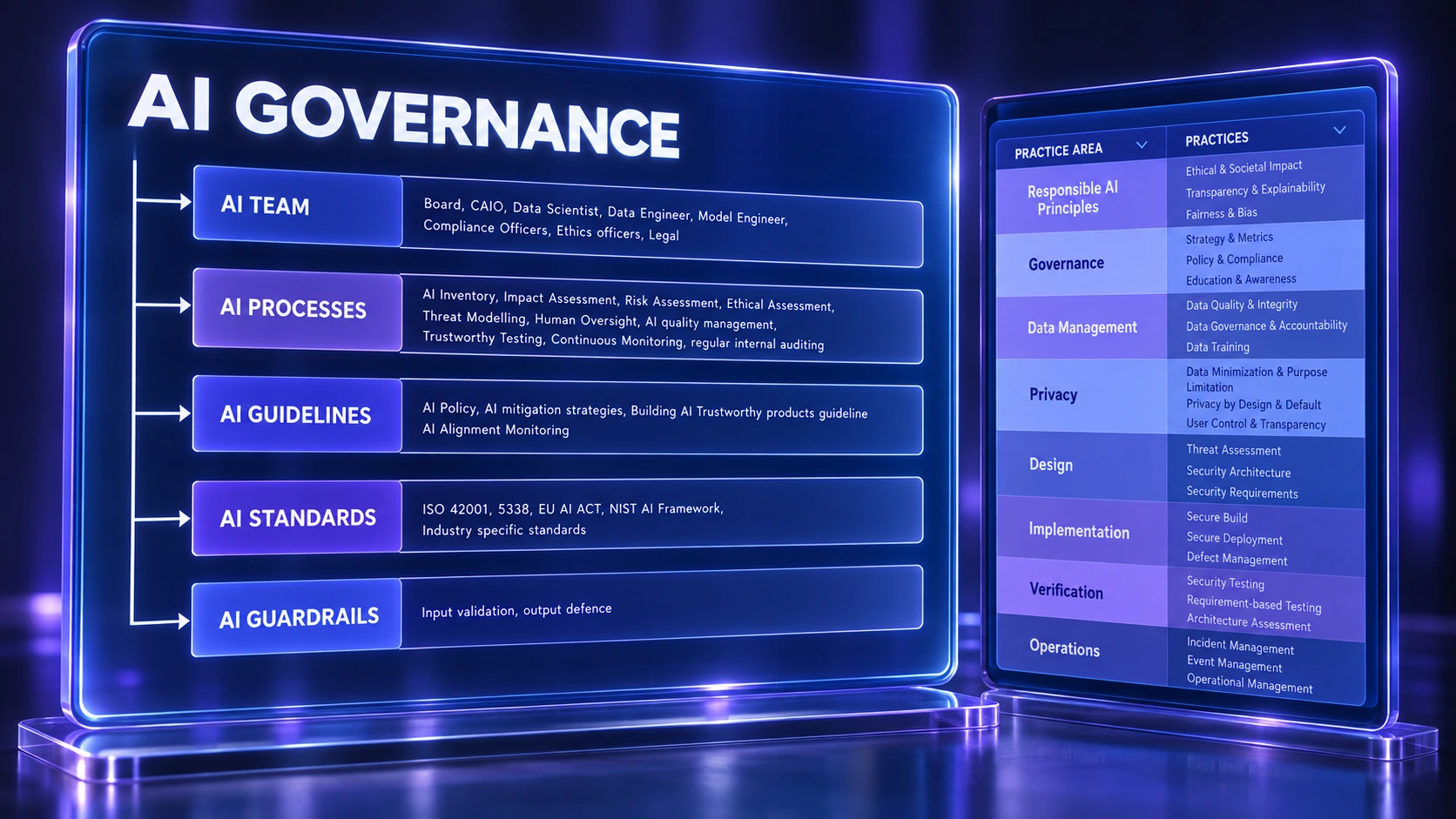
Five dimensions. Decisions supported by evidence.
The review considers what exists, how it is used and what evidence supports it. The examples below guide discussion; their relevance depends on the agreed scope.
AI Team
Examine ownership, skills and collaboration between the people governing, developing and using AI.
Evidence to discuss: roles, decision authority, capability gaps and training plans.
Processes
Review the activities and decision points used to manage AI from the first use case through operation and change.
Evidence to discuss: inventories, assessment workflows, approvals, monitoring and incident processes.
Guidelines
Check whether organisational expectations become practical instructions that teams can apply.
Evidence to discuss: AI policies, design guidance, acceptable use and escalation instructions.
Standards
Review the requirements and references selected for the organisation and how teams translate them into practice.
Evidence to discuss: applicability decisions, requirement mappings and responsibilities for updates.
Guardrails
Examine technical and operational controls used to keep behaviour within the intended boundaries.
Evidence to discuss: control designs, configurations, test results and monitoring records.
Build a shared picture before choosing priorities.
Scope the review
Agree the AI initiatives, teams and lifecycle stages to examine. Identify the decisions the assessment needs to support.
Examine practices
Review relevant material and discuss it with stakeholders. Distinguish documented intentions from practices that are operating.
Agree the roadmap
Discuss findings, dependencies and priorities. Identify owners, practical actions and a point to review progress.
An assessment your team can act on.
A documented starting point
A structured view of practices and evidence across the five dimensions, with gaps and areas requiring further investigation.
A prioritised improvement roadmap
Actions connected to organisational needs, proposed ownership and follow-up. Scope and depth are agreed for the engagement.
Make the next decision explicit.
For each priority, establish what needs to change, who should own it and what evidence would demonstrate progress.
Turn assessment findings into working governance.
Use the Governance Framework to connect priority actions with responsibilities, lifecycle activities and evidence requirements.